
In Trauma Made Simple, trauma expert Dr. Jamie Marich brings her practical style of training to print, using clinical common sense to wade through theory, research, and hype surrounding trauma. Learn about trauma in a way that is relevant to clinical work, including extensive coverage on PTSD and other diagnoses through a bio-psycho-social-spiritual lens. Make clinically informed decisions based on setting, client preparedness, and other contextual variables. Develop strategies for treatment planning based on the best possible treatments in the field today. Trauma Made Simple addresses a variety of issues that are imperative to trauma competency in clinical work, including how to handle grief and mourning, assessing for and addressing addiction (even if you are not an addiction counselor) and how to manage professional development issues, including self-care.
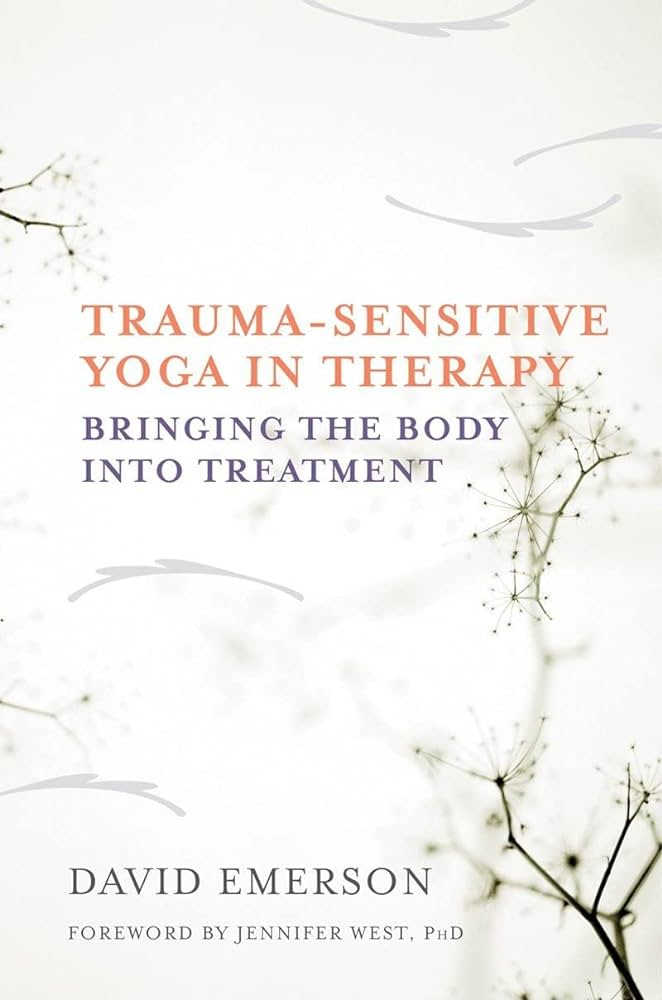
Synthesized here and presented in a concise, reader-friendly format, all clinicians, regardless of their background or familiarity with yoga, can understand and use these simple techniques as a way to help their clients achieve deeper, more lasting recovery. Unlike traditional, mat-based yoga, TSY can be practiced without one, in a therapist’s chair or on a couch. Emphasis is always placed on the internal experience of the client him- or herself, not on achieving the proper form or pleasing the therapist. As Emerson carefully explains, the therapist guides the client to become accustomed to feeling something in the body feet on the ground or a muscle contracting in the present moment, choosing what to do about it in real time, and taking effective action. In this way, everything about the practice is optional, safe, and gentle, geared to helping clients to befriend their bodies. With over 30 photographs depicting the suggested yoga forms and a final chapter that presents a portfolio of step-by-step yoga practices to use with your clients, this practical book makes yoga therapy for trauma survivors accessible to all clinicians. As an adjunct to your current treatment approach or a much-needed tool to break through to your traumatized clients, Trauma-Sensitive Yoga in Therapy will empower you and your clients on the path to healing.
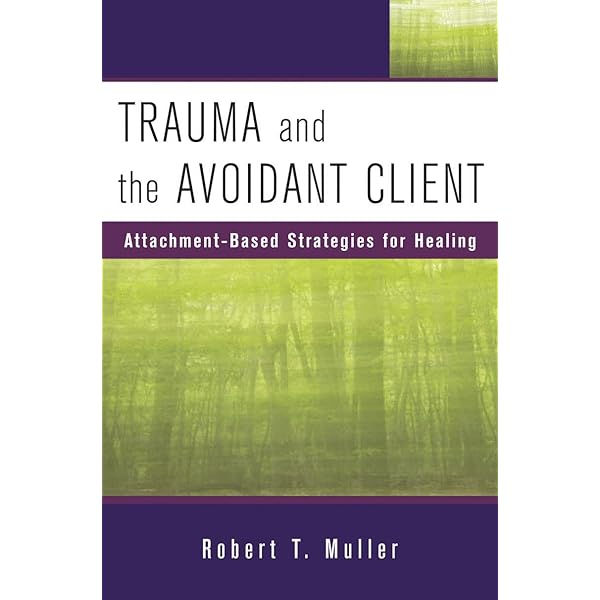
How to effectively engage traumatized clients, who avoid attachment, closeness, and painful feelings. A large segment of the therapy population consist of those who are in denial or retreat from their traumatic experiences. Here, drawing on attachment-based research, the author provides clinical techniques, specific intervention strategies, and practical advice for successfully addressing the often intractable issues of trauma. Trauma and the Avoidant Client will enhance the skills of all mental health practitioners and trauma workers, and will serve as a valuable, useful resource to facilitate change and progress in psychotherapy.
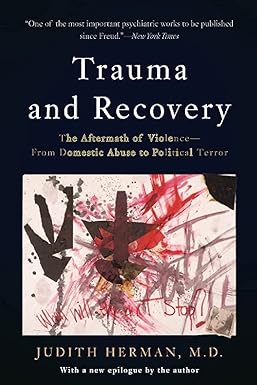
In this groundbreaking book, a leading clinical psychiatrist redefines how we think about and treat victims of trauma. A “stunning achievement” that remains a “classic for our generation.” (Bessel van der Kolk, M.D., author of The Body Keeps the Score). Trauma and Recovery is revered as the seminal text on understanding trauma survivors. By placing individual experience in a broader political frame, Harvard psychiatrist Judith Herman argues that psychological trauma is inseparable from its social and political context. Drawing on her own research on incest, as well as a vast literature on combat veterans and victims of political terror, she shows surprising parallels between private horrors like child abuse and public horrors like war. Hailed by the New York Times as “one of the most important psychiatry works to be published since Freud,” Trauma and Recovery is essential reading for anyone who seeks to understand how we heal and are healed.

This unique, hands-on clinical guide examines the significant relationship between trauma, dissociation, and eating disorders and delivers a trauma-informed phase model that facilitates effective treatment of individuals with all forms of eating disorders. It describes, step-by-step, a four-phase treatment model encompassing team coordination, case formulation, and a trauma-informed, dissociation- and attachment-sensitive approach to treating eating disorders. Edited by noted specialists in eating and other behavioral health disorders, Trauma-Informed Approaches to Eating Disorders examines eating disorders from neurological, medical, nutritional, and psychological perspectives. Dedicated chapters address each treatment phase from a variety of orientations, ranging from EMDR and CBT to body-centered and creative therapies. The book also reveals the effectiveness of a multifaceted, phase model approach. Recognizing the potential pitfalls and traps of treatment and recovery, it also includes abundant psychoeducational tools for the client
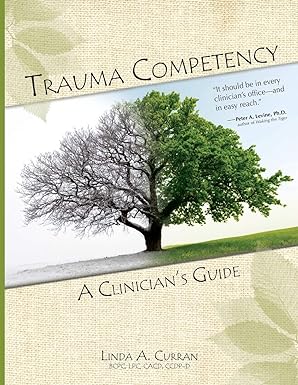
This is a book for clinicians. More specifically, it is a book for clinicians to use with their clients affected by trauma’s sequelae. Unique in its approach, author Linda Curran not only defines and explains the current trauma paradigm-relevant, theories and current neuroscience, but step-by-step demonstrates its in-session clinical utility and applicability. This is the book that clinicians will refer to daily – the beat-up book whose pages are falling out due to excessive handling, referencing specific pages over and over, and copying handouts for clients. From assessment through stabilization, from internal and external resourcing to the working through of traumatic material, each chapter guides the clinician further into trauma’s theory and practice. Recommended for all clinicians working with trauma, this book is a clear and concise, reader-friendly illumination of the HOW and the WHY of trauma treatment.
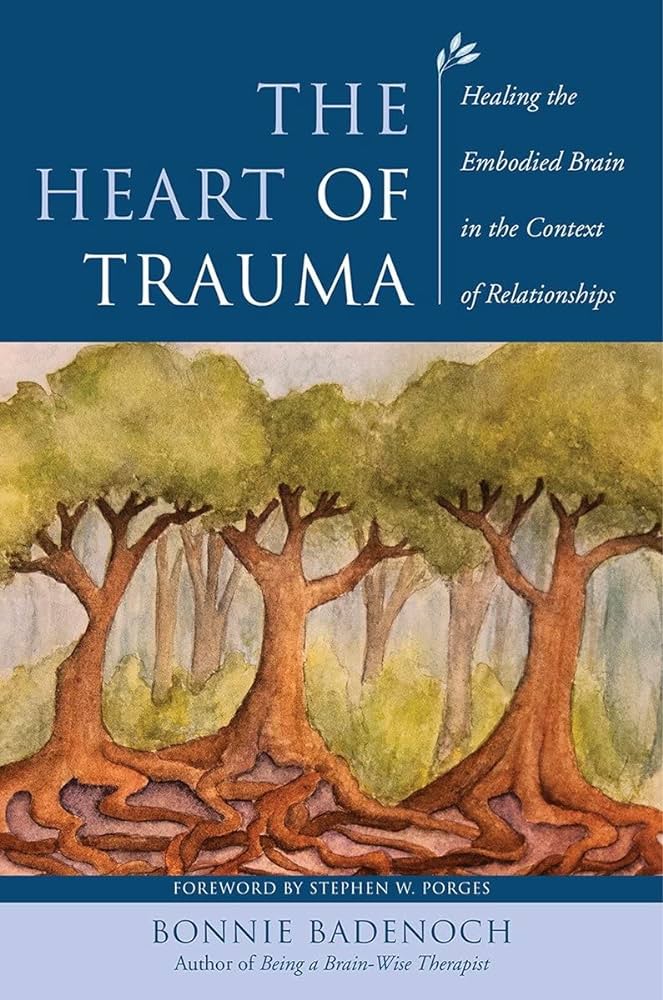
In this book, Bonnie Badenoch, a gifted translator of neuroscientific concepts into human terms, offers readers brain- and body-based insights into how we can form deep relational encounters with our clients and our selves and how relational neuroscience can teach us about the astonishing ways we are interwoven with one another. How we walk about in our daily lives will touch everyone, often below the level of conscious awareness. The first part of The Heart of Trauma provides readers with an extended understanding of the ways in which our physical bodies are implicated in our conscious and non-conscious experience. Badenoch then delves even deeper into the clinical implications of moving through the world. She presents a strong, scientifically grounded case for doing the work of opening to hemispheric balance and relational deepening.
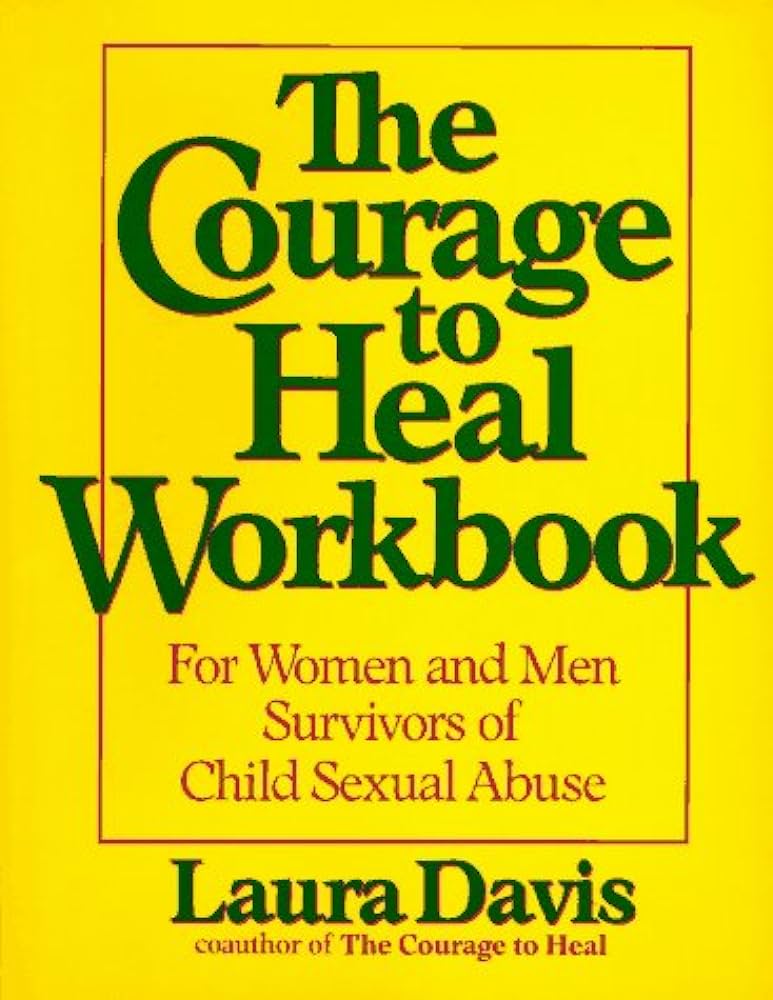
In this groundbreaking companion to The Courage to Heal, Laura Davis offers an inspiring, in-depth workbook that speaks to all women and men healing from the effects of child sexual abuse. The combination of checklists, writing and art Projects, open-ended questions and activities expertly guides the survivor through the healing process. Survival Skills—Teaches survivors to create a safe, supportive environment, ask for help, deal with crisis periods, and choose therapy. Aspects Of Healing—Focuses on the healing process: gaining a capacity for hope, breaking silence, letting go of shame, turning anger into action, planning a confrontation, preparing for family contact, and affirming personal progress. Guidelines For Healing Sexually—Redefines the concept of “safe sex” and establishes healthy ground rules for sexual contact.

Those affected by complex PTSD, or C-PTSD, commonly feel as though there is something fundamentally wrong with them—that somewhere inside there is a part of them that needs to be fixed. Facing one’s PTSD is a brave, courageous act—and with the right guidance, recovery is possible. In The Complex PTSD Workbook, you’ll learn all about C-PTSD and gain valuable insight into the types of symptoms associated with unresolved childhood trauma. Take healing into your own hands while applying strategies to help integrate positive beliefs and behaviors.
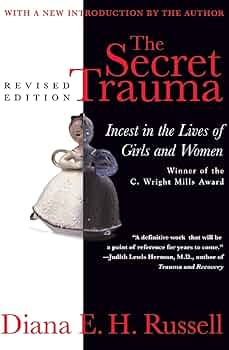
The Secret Trauma remains the definitive argument for the overwhelming prevalence of incestuous abuse. Based on findings about San Francisco, the book makes a persuasive case for an epidemic of abuse on a national scale. In her nuanced and sophisticated analysis, Russell carefully explores the complex variables of incestuous abuse: the changing incidence of abuse over time, the severity of th abuse, the victim’s age, factors of class, race, and ethnicity, and long term effects on victims. In a new introduction to the revised edition, Russell takes on the most important issue to arise in the field since the book was originally published in 1986: the serious backlash that followed the outpouring of reports by victims/survivors, and the controversy over false accusations and false memories.”
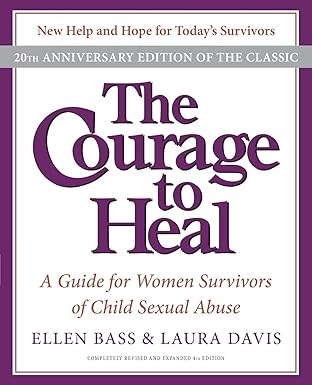
The Courage to Heal is an inspiring, comprehensive guide that offers hope and a map of the healing journey to every woman who was sexually abused as a child—and to those who care about her. Although the effects of child sexual abuse are long-term and severe, healing is possible. Weaving together personal experience with professional knowledge, the authors provide clear explanations, practical suggestions, and support throughout the healing process. Readers will feel recognized and encouraged by hundreds of moving first-person stories drawn from interviews and the authors’ extensive work with survivors, both nationally and internationally.
- Precedente
- Pagina 1
- Pagina 2
- Pagina 3
- Pagina 4
- Pagina 5
- Pagina 6
- …
- Pagina 8
- Successivo